JK Cement Q1: revenue up 20% YoY but consolidated PAT falls 15% on margin squeeze
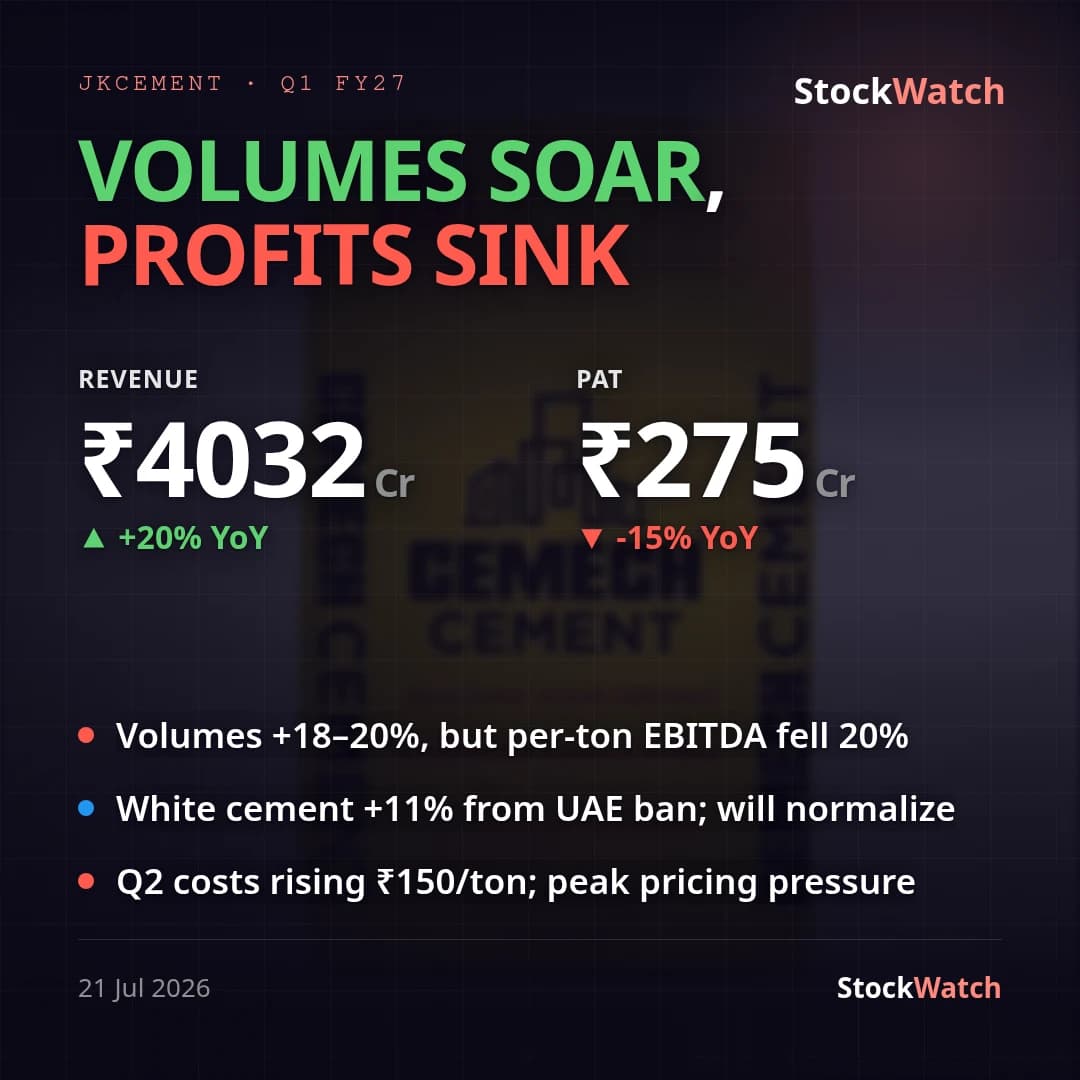
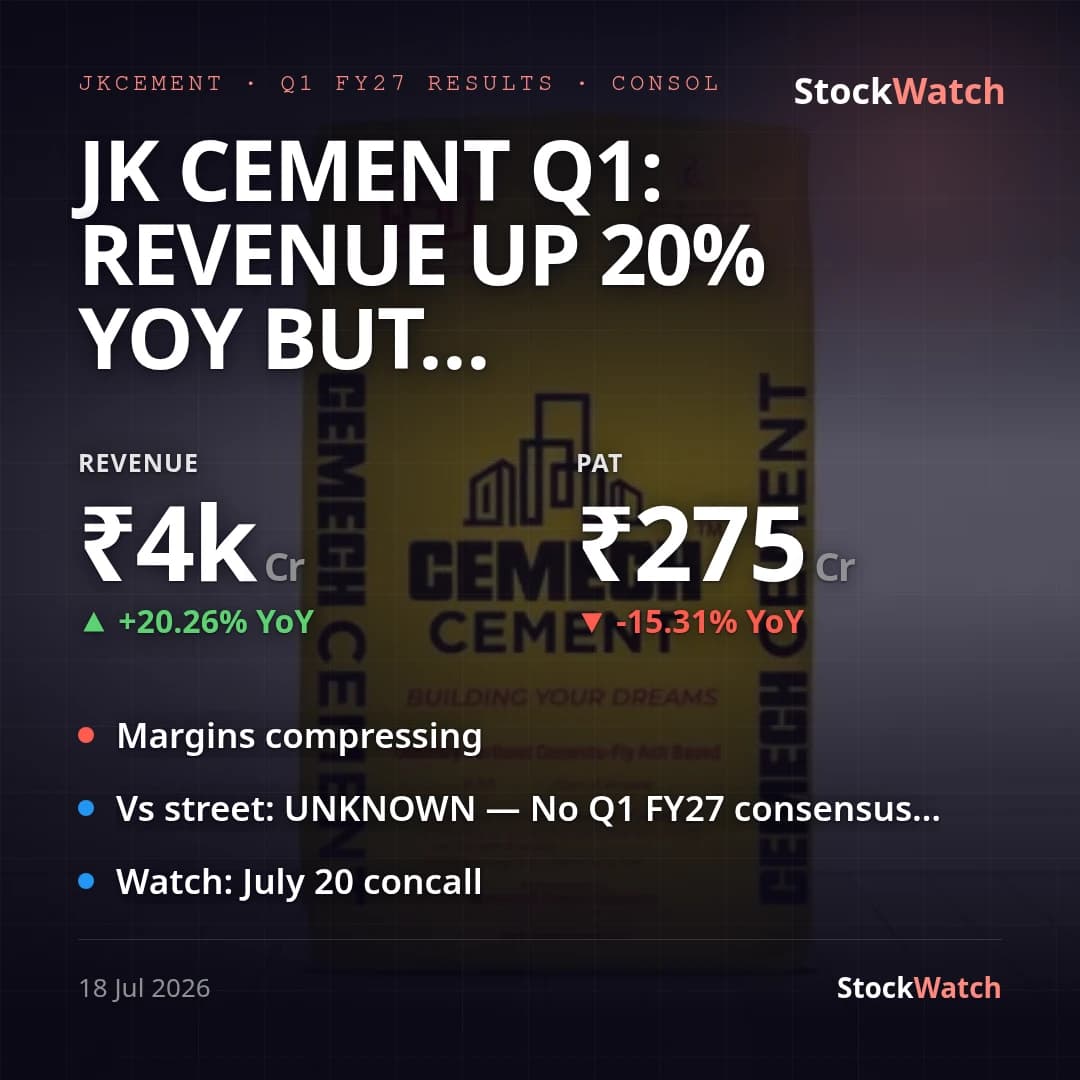
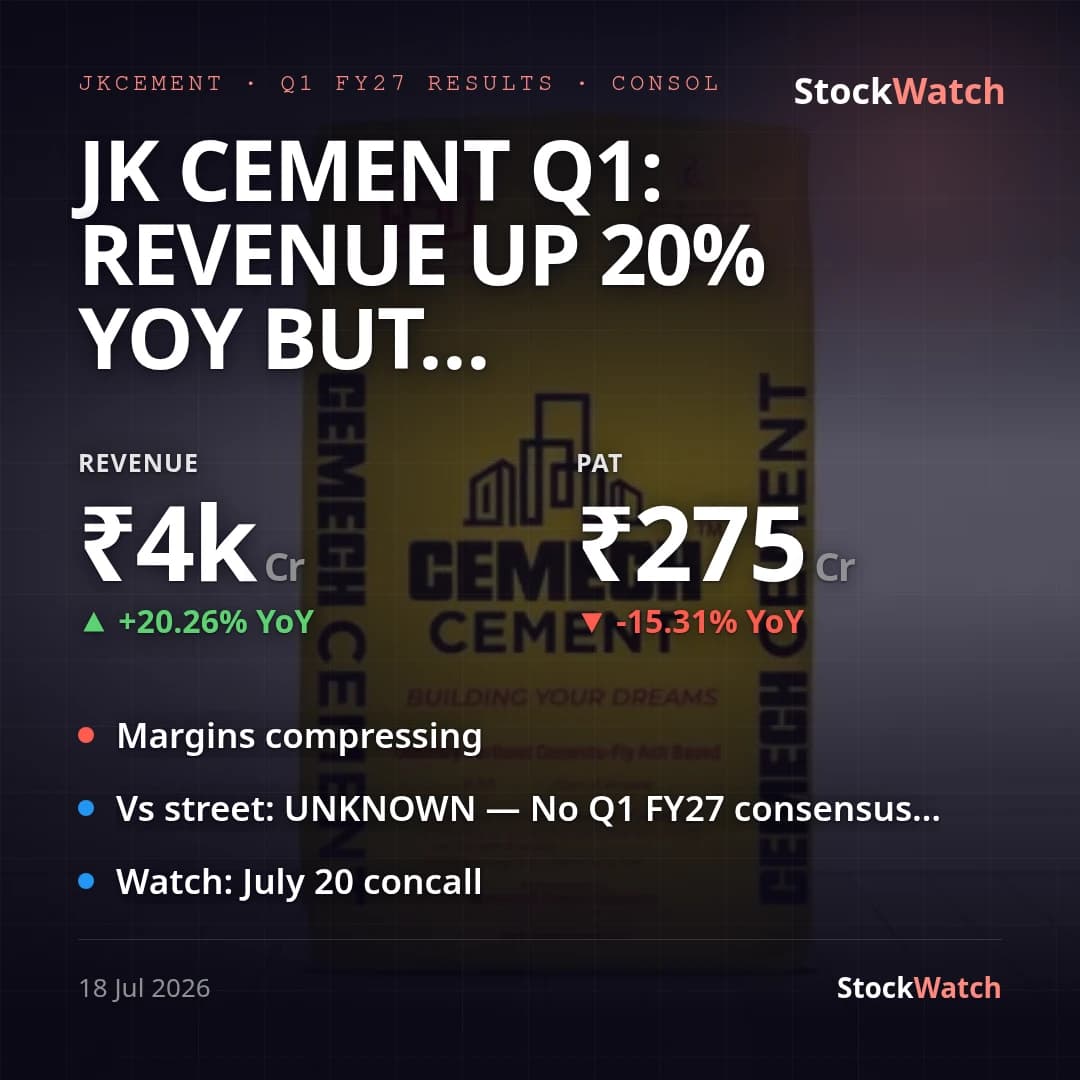
J.K. Cement opened FY27 with a sharp split between topline and profit. Consolidated revenue rose ~20.3% YoY to ₹4,031.72 Cr — a strong print reflecting the volume ramp from expanded grey-cement capacity (now ~32.26 MTPA) and consistent with management's FY27 double-digit volume-growth guidance. But consolidated PAT fell ~15.3% YoY to ₹274.62 Cr (₹324.25 Cr a year ago), and slipped ~17% sequentially from Q4's ₹330.88 Cr. There were no exceptional items on either side, so the decline is fully underlying, not a one-off distortion.
The entire story sits in the margin bridge. Operating margin compressed to 16.07% from a very high 20.51% in Q1 FY26 (that year-ago quarter itself had PAT +75% YoY on a 21%+ EBITDA margin — a rich base), and net profit margin fell to 6.75% from 9.51%. Total consolidated expenses grew ~25.5% YoY, outpacing 20% revenue growth: cost of materials consumed jumped ~35%, other expenses ~45%, and freight ~19%. Power & fuel (+12.5%) rose more slowly, so the squeeze is materials/other-cost inflation plus mix, not fuel. Standalone tells a slightly milder version — revenue +21.2% YoY, PAT ₹291.00 Cr down ~12.5% (vs restated ₹332.48 Cr) — the ~3pt gap to consolidated being the drag from subsidiaries, chiefly the loss-making paint business.
Against the prior concall's bullish, confident tone this is a partial contradiction: volumes/topline delivered as promised, but profitability went the wrong way and the paint venture — guided to reach FY27 breakeven — is not there yet, with the 9 consolidated subsidiaries posting a combined net loss of ₹27.18 Cr for the quarter. The Board that approved these results also cleared the AGM slate this week and disclosed FMR/FIL raising their stake to 9.17%; neither bears on the operating print. No formal profit guidance is on record, and no Q1 street consensus was locatable pre-result.
What it sets up: the July 20 earnings call will be judged on management's read of cement pricing/demand and a path back on margins, and on when paint turns profitable — the two levers that decide whether strong volume growth starts converting to profit again.