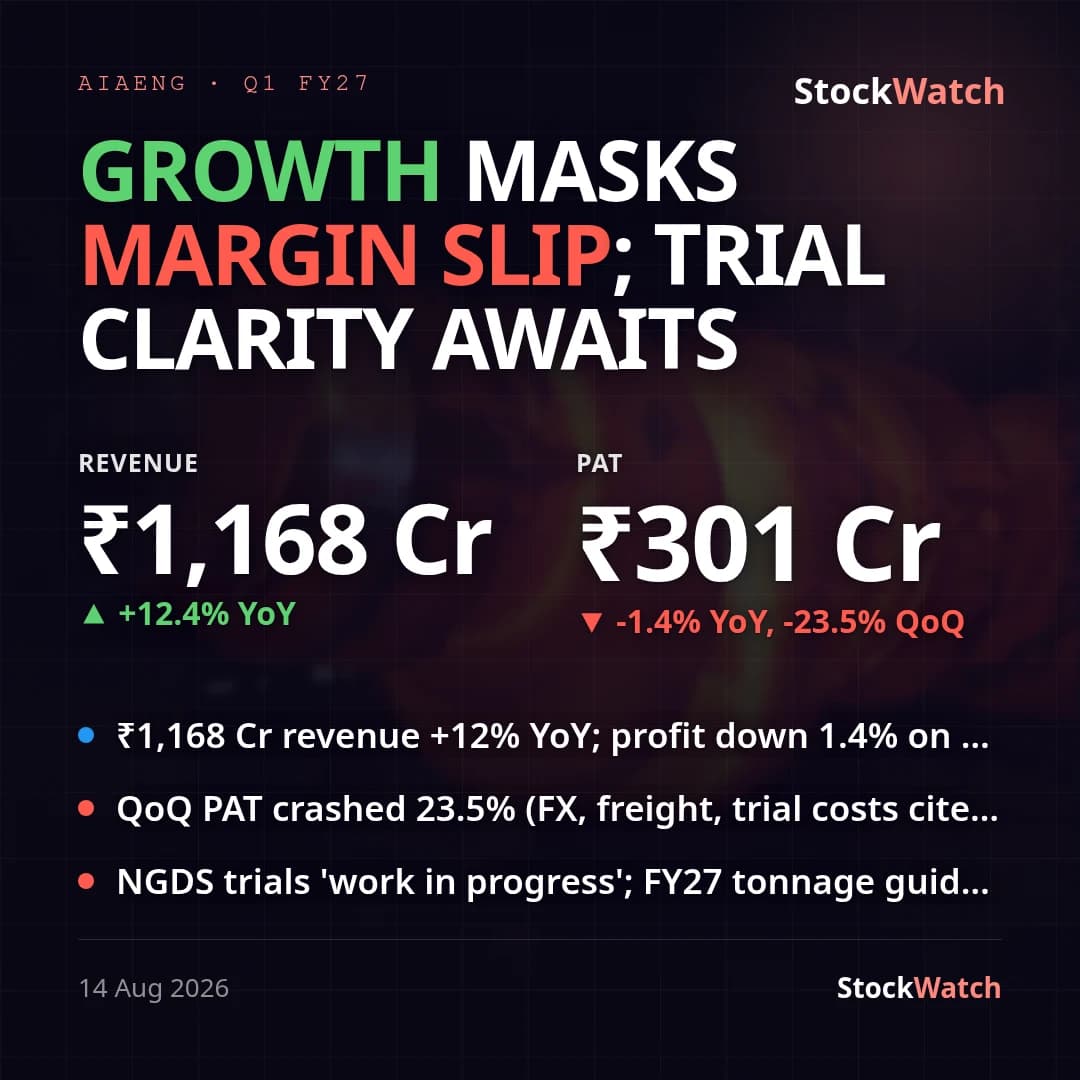
AIA Engineering's consolidated PAT fell 10.1% YoY to ₹249.43 Cr (and 17.1% QoQ from ₹300.99 Cr) even as consolidated revenue grew 6.2% YoY to ₹1,112.77 Cr, though that was down 4.7% sequentially from Q1's ₹1,168.02 Cr. The disconnect is entirely a margin story: net profit margin compressed to 22.4% from 24.2% a year ago and 23.5% last quarter, continuing the squeeze flagged after Q1 rather than reversing it. There were no exceptional items in either the current or year-ago quarter, so the decline is operational, not a base-effect artifact.
The margin pressure sits on the cost line rather than other income — total expenses grew faster than revenue from operations, with materials, freight-out and employee costs all elevated versus the scale of topline growth. A ₹6.90 Cr share of profit from the Vega MPS Australia joint venture (versus just ₹0.40 Cr a year ago) partly cushioned consolidated PBT. Standalone PAT of ₹265.01 Cr came in above the consolidated figure of ₹249.43 Cr, a basis divergence worth flagging: overseas subsidiaries and the Welcast Steels wind-down are a net drag at the group level (minority interest alone was a ₹0.30 Cr loss), so readers comparing the standalone number elsewhere should not read it as the headline.
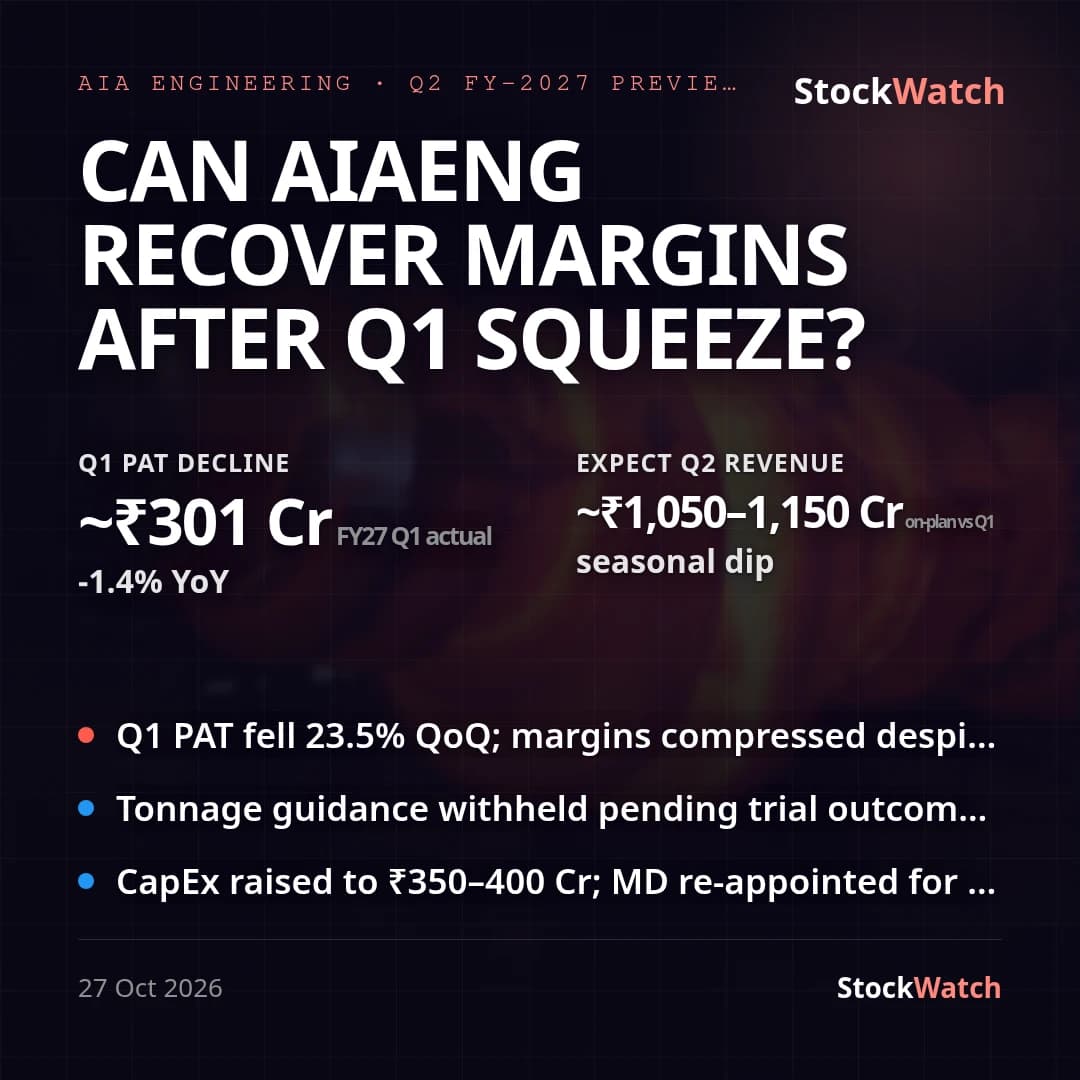
Against our pre-result preview, the ₹1,112.77 Cr print landed inside the flagged ₹1,050–1,150 Cr revenue range, but the margin recovery the preview told readers to "watch for" did not materialise — NPM fell further rather than rebounding. No management press release was available to cross-check framing, and this filing carries no tonnage, realisation or NGDS-trial detail, so August's guidance stance (FY27 tonnage target undisclosed, realisation held near ₹165/kg despite Q1 running above ₹180/kg) remains unverifiable from these numbers alone. The quarter closed against a backdrop of governance continuity — MD Bhadresh K. Shah's five-year reappointment (Sep 15) and the 36th AGM dividend approval (Sep 16) — alongside routine events (CRISIL ESG 60 rating, trading-window closure) that carry no direct read-through to the P&L.
Going into Q3, the open question is whether cost discipline restores operating leverage toward the 20–22% long-term margin band management has cited, given OPM has been compressing from the high-20s over the last two quarters.