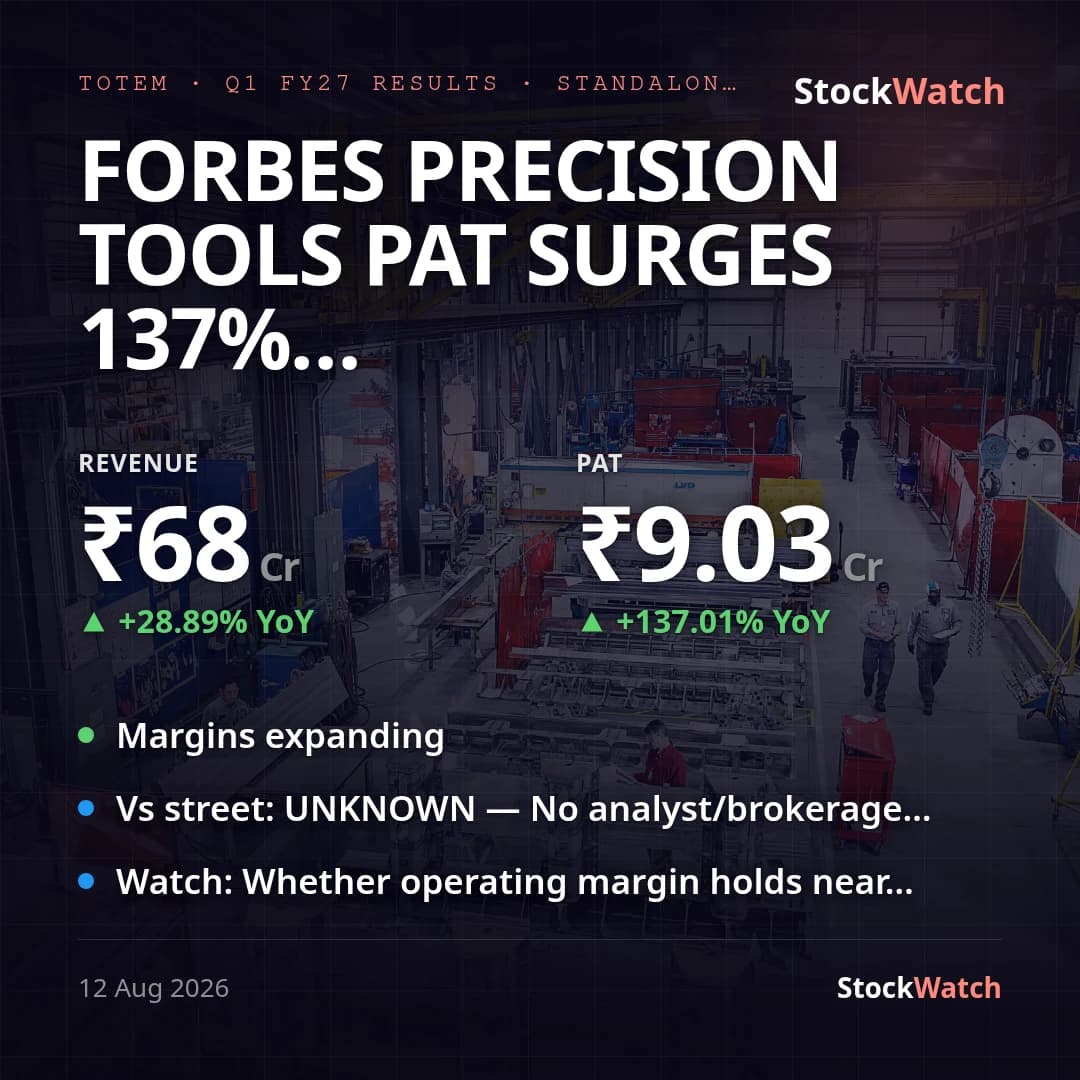
Forbes Precision Tools PAT surges 137% YoY to Rs9.03 Cr as margins expand off Q4 highs
Forbes Precision Tools and Machine Parts reported standalone (its only reporting basis) revenue of Rs67.55 Cr for Q1 FY27, up 28.9% YoY from Rs52.41 Cr, with PAT up 137% YoY to Rs9.03 Cr from Rs3.81 Cr — a clean comparison since neither quarter carried exceptional items. Sequentially the print eased 4.8% on revenue and 18.4% on PAT versus Q4 FY26's Rs70.96 Cr/Rs11.06 Cr.
Profitability improved sharply on a YoY basis: net margin (on total income) rose to 13.21% from 7.15%, and operating (EBITDA) margin to 22.92% from 16.05%, both reflecting operating leverage as revenue scaled. However both margins sit below Q4 FY26's 15.28%/25.69% peak — Q4's number was flattered by a Rs3.75 Cr drawdown in finished-goods inventory that reduced reported costs, versus a Rs0.92 Cr inventory build this quarter that added to costs. That swing, not a change in demand or input costs, accounts for most of the QoQ margin compression; materials consumed held near 34.8% of revenue versus 34.0% in Q4, and employee costs were flat sequentially at Rs12.45 Cr.
The company has no formal guidance on record and none was found for this quarter, so vs-guidance is not applicable; likewise, no analyst or brokerage coverage exists for this roughly Rs772 Cr market-cap precision-components maker, so there is no street consensus to grade the print against. No separate management press release accompanied this filing beyond the standard board-outcome letter. Alongside the results, the board declared an interim dividend of Rs5 per share (50% of face value, record date August 18, 2026) and re-appointed Mahesh Tahilyani as Managing Director for a further three-year term effective April 1, 2027, signalling management continuity through the next reporting cycle.
Going into Q2 FY27, the two data points worth tracking are whether revenue holds in the Rs65-70 Cr band the last two quarters have established, and whether operating margin resettles in the low-to-mid 20s now that the one-off inventory tailwind that lifted Q4 has faded.