Tata Motors Q1FY27: consol PAT +83% to Rs 2,556 Cr on MTM gain, core margins compress
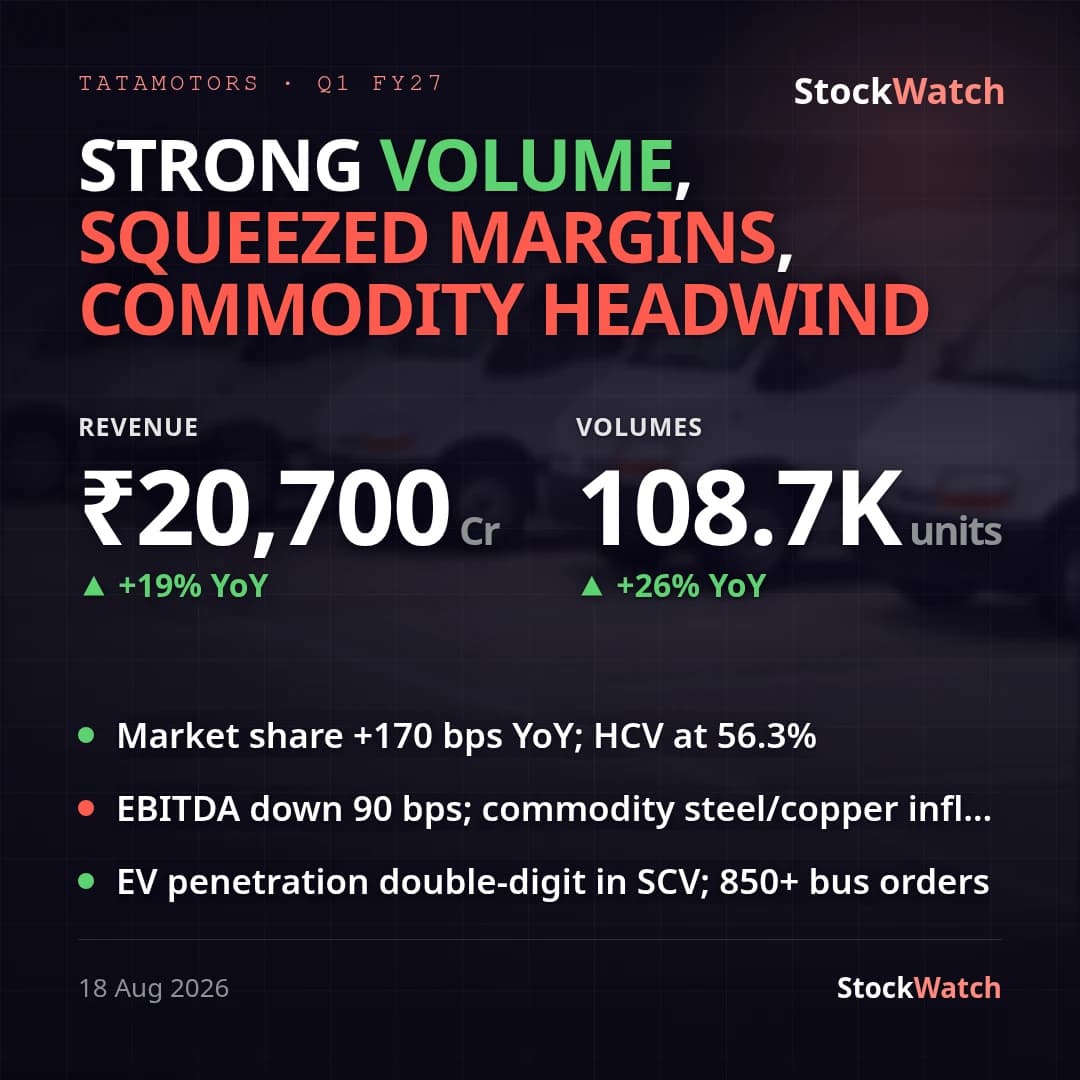
Tata Motors Ltd (formerly TML Commercial Vehicles Ltd) reported consolidated revenue of Rs 20,667 Cr for Q1 FY27 (quarter ended June 30, 2026), up 19.3% YoY from Rs 17,324 Cr, and consolidated PAT of Rs 2,556 Cr, up 82.9% YoY from Rs 1,397 Cr. Standalone — the CV-only entity, cleaner of consolidation effects — posted revenue of Rs 19,329 Cr (+23.3% YoY) and PAT of Rs 1,528 Cr (+8.3% YoY from Rs 1,411 Cr), both audited. The headline consolidated PAT jump overstates the quarter's underlying strength: it includes a Rs 1,135 Cr non-cash mark-to-market gain on the Company's investment in Tata Capital Ltd, booked through the FVTPL (fair value through P&L) line, versus no such gain a year ago (and a Rs 687 Cr FVTPL loss in the preceding quarter). Stripping out this MTM swing and the Rs 79 Cr net exceptional loss (Rs 90 Cr employee separation cost and Rs 17 Cr Freight Tiger acquisition cost, partly offset by a Rs 38 Cr remeasurement gain), adjusted consolidated PBT of roughly Rs 1,914 Cr is up only about 14% YoY, and adjusted PAT growth is closer to 7-8% YoY — tracking the standalone print almost exactly. The standalone number is the more reliable read on the core commercial-vehicle business this quarter.
Margins compressed on both measures despite the profit headline. On the press release's EBITDA basis, standalone margin fell 60 bps YoY to 11.7% (from 12.3%) and consolidated EBITDA margin fell 90 bps YoY to 10.9% (from 11.8%). On the company's regulatory 'operating margin' ratio, standalone margin fell to 11.69% from 12.46% YoY (-77 bps, and down from 13.88% sequentially), while consolidated operating margin fell more sharply to 10.88% from 14.40% YoY (-352 bps) — the consolidated figure is additionally distorted by the FVTPL swing moving through the P&L outside EBITDA. Management (MD Girish Wagh and CFO GV Ramanan) attributed the pressure to 'severe commodity headwinds amidst geopolitical tensions,' crediting disciplined pricing, cost efficiency and improved operating leverage for containing the damage — consistent with the prior guidance of only a partial 2% price hike rather than full cost pass-through, aimed at protecting demand.
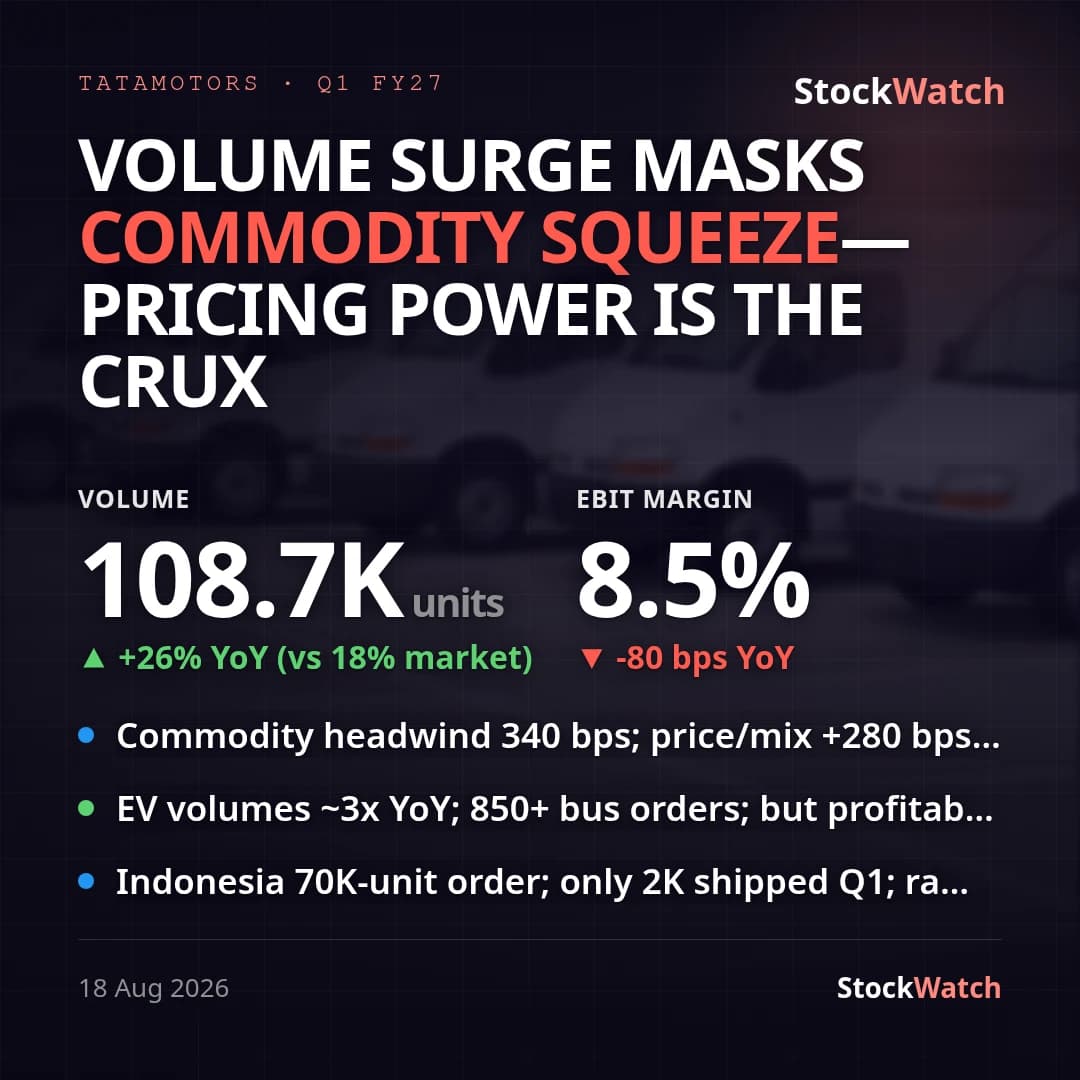
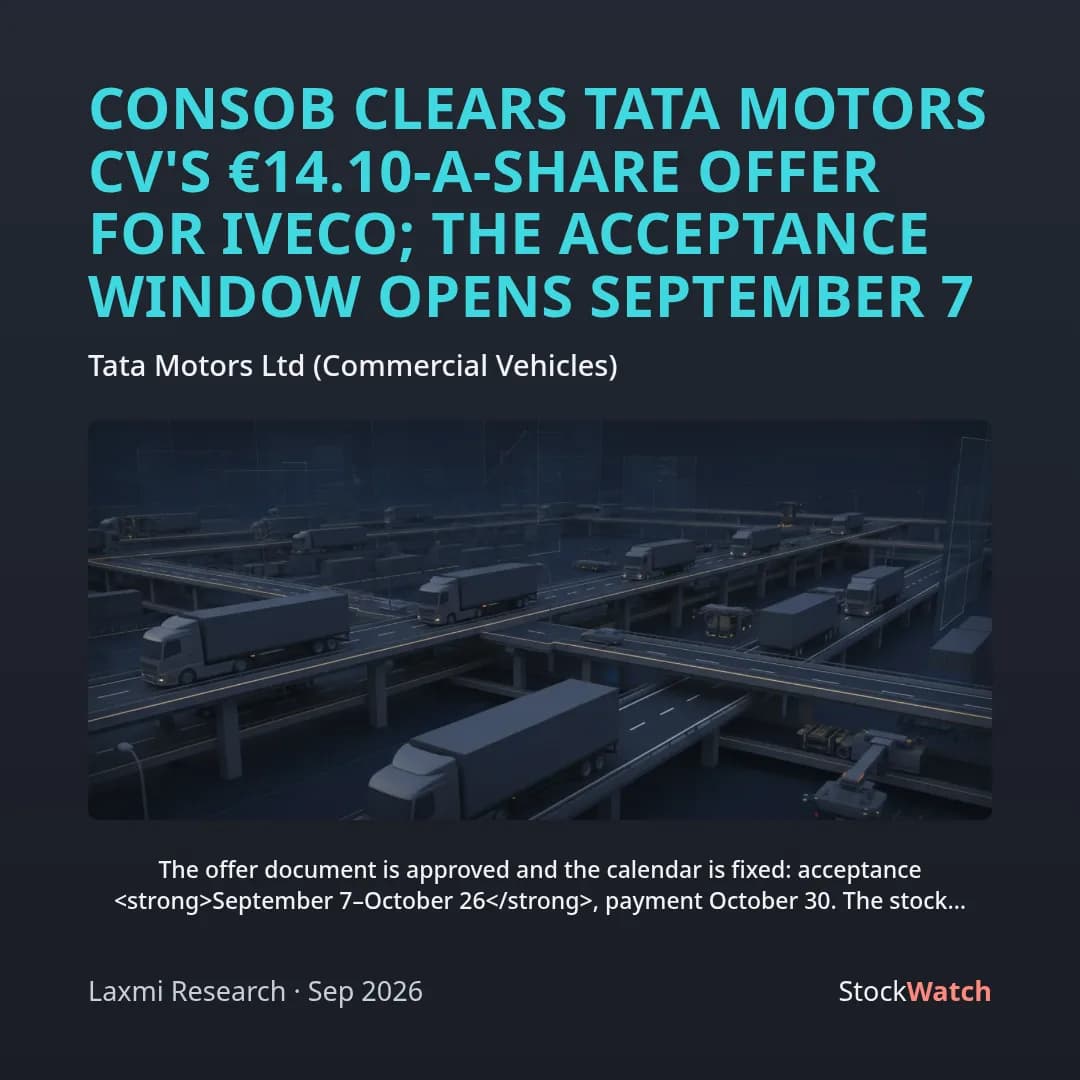
Against the last concall's guidance of 'at least single-digit' volume growth for the quarter, Tata Motors delivered total wholesales of 108.7K units, up 26% YoY (domestic +26%, export +35%) — a clear beat, with domestic CV market share up 100 bps sequentially to 36.8%. Street expectations (per a Business Standard Q1 FY27 auto preview published July 20, 2026) had priced in margin contraction of 200-235 bps and a 7-13% PAT decline for the CV business on broadly flat EBITDA; the actual standalone print of -60 bps margin and +8.3% PAT growth beat that bearish setup comfortably, even though the adjusted consolidated PAT growth of roughly 7-8% is far more modest than the reported +83% figure implies. Corporate actions this quarter reinforce two separate growth threads flagged earlier in the year: the Iveco tender offer (Rs 41,001 Cr / EUR 3.8 billion consideration) is in its final regulatory-approval stage, with launch expected in early September 2026 and closure by early November 2026; and Freight Tiger became a subsidiary (~63.6% stake, after an incremental ~18.1% stake bought for Rs 95.66 Cr in May 2026), aimed at building an integrated logistics ecosystem with FleetEdge.
Free cash flow turned sharply positive — standalone FCF of Rs 1,114 Cr versus -Rs 1,796 Cr a year ago, a swing of Rs 2,910 Cr — even after a Rs 1,473 Cr final dividend payout, leaving domestic net cash at Rs 7,140 Cr (consol net cash Rs 13,500 Cr). Going into Q2 FY27, two things are worth tracking: whether the Tata Capital MTM gain reverses (it swung by over Rs 1,800 Cr between Q4 FY26 and Q1 FY27 alone), and whether standalone EBITDA margin — now down for a second straight period — stabilizes as commodity pressure persists, per management's own framing.