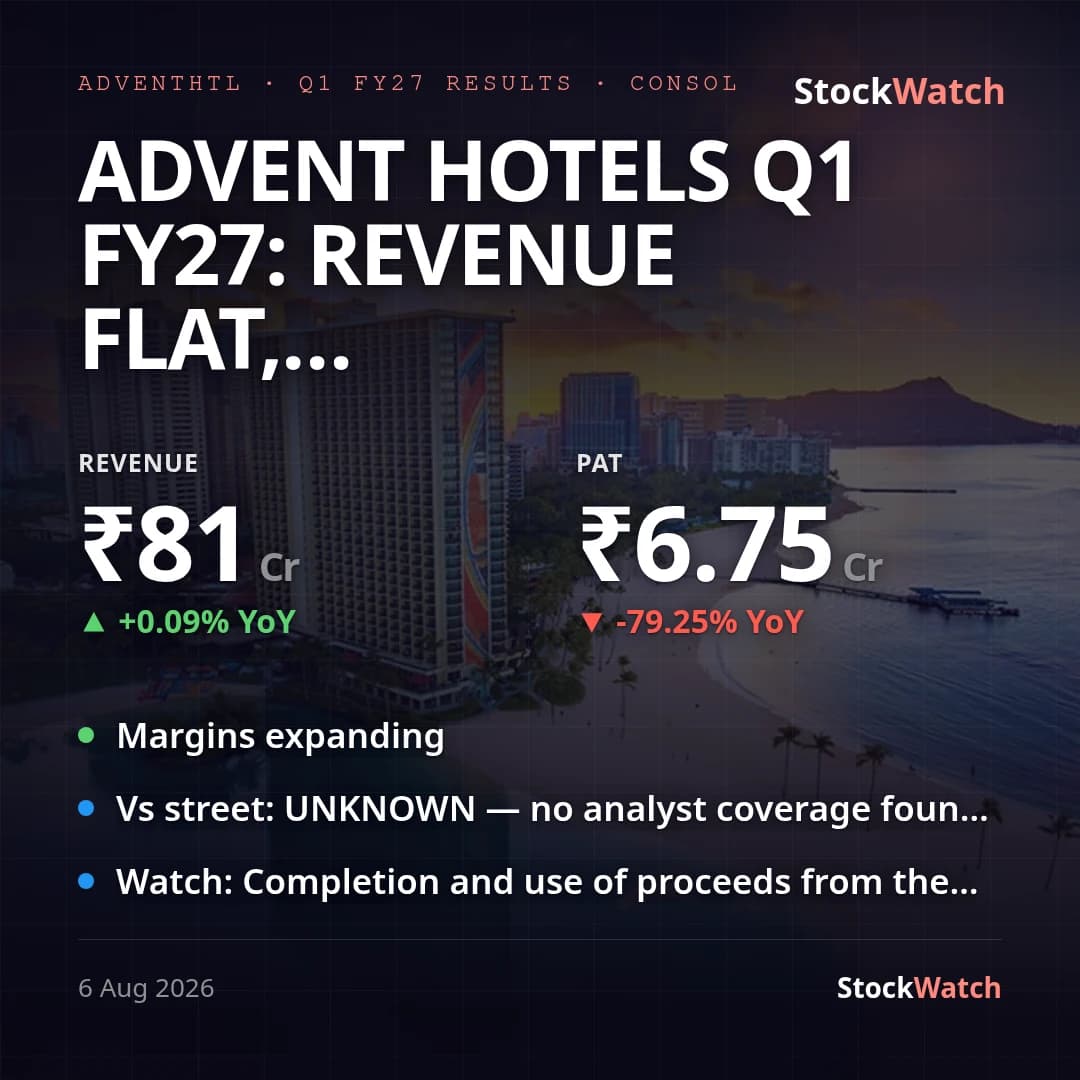
The headline here is the YoY swing, not the QoQ print: consolidated profitability returned after a year-ago loss, but the scale stayed modest — profit left thin once a joint-venture drag and minority interests were accounted for, in a quarter that is structurally the weakest for Indian hospitality. The steep sequential fall from Q1 FY27 is better read as calendar seasonality (Jul-Sep is the monsoon off-season for domestic hotels) than a trend break, which is why the YoY comparison — the more meaningful lens for a seasonal business — is the one that should anchor the read, and it moved in the right direction.
On drivers: pre-exceptional, pre-JV operating profit was healthy, but the Group's 49% share of a loss at the Bamboo Hotel & Global Centre (Delhi) joint venture — an asset already classified held-for-sale pending a lender NOC — cut profit before tax before taxes were even applied. Non-controlling interests then absorbed roughly a third of consolidated net profit, since the main operating subsidiary (Goan Hotels & Realty, running the Grand Hyatt Goa and Hilton Mumbai International Airport properties) is only 75-100% owned. No exceptional items hit any of the three quarterly columns this time, so the YoY and QoQ moves are on a clean like-for-like basis. There is no formal management guidance on record for this name, and no analyst or consensus estimate for the quarter turned up in a public search — this is a thinly-covered micro-cap — so both vsGuidance and vsStreet are judged unknown rather than assumed.
Two corporate developments sit around this print without touching its numbers. First, subsequent to quarter-end the company agreed (Oct 13, 2026) and closed (Oct 16, 2026) the purchase of the remaining 25% stake in BD&P Hotels for ₹40 Cr, making it wholly owned — a non-adjusting event that will show up as a smaller minority-interest deduction from the next quarter. Second, subsidiaries drew new secured NCD facilities from Authum Investment & Infrastructure during the half, primarily to refinance existing debt — a balance-sheet action, not an operating one. Separately, the standalone (parent-only) entity remains a pure non-operating holding company with zero revenue from operations and posted a small loss on its own cost base; the entire consolidated profit is generated at the subsidiary level, so the standalone loss should not be read as a sign of distress in the operating business.