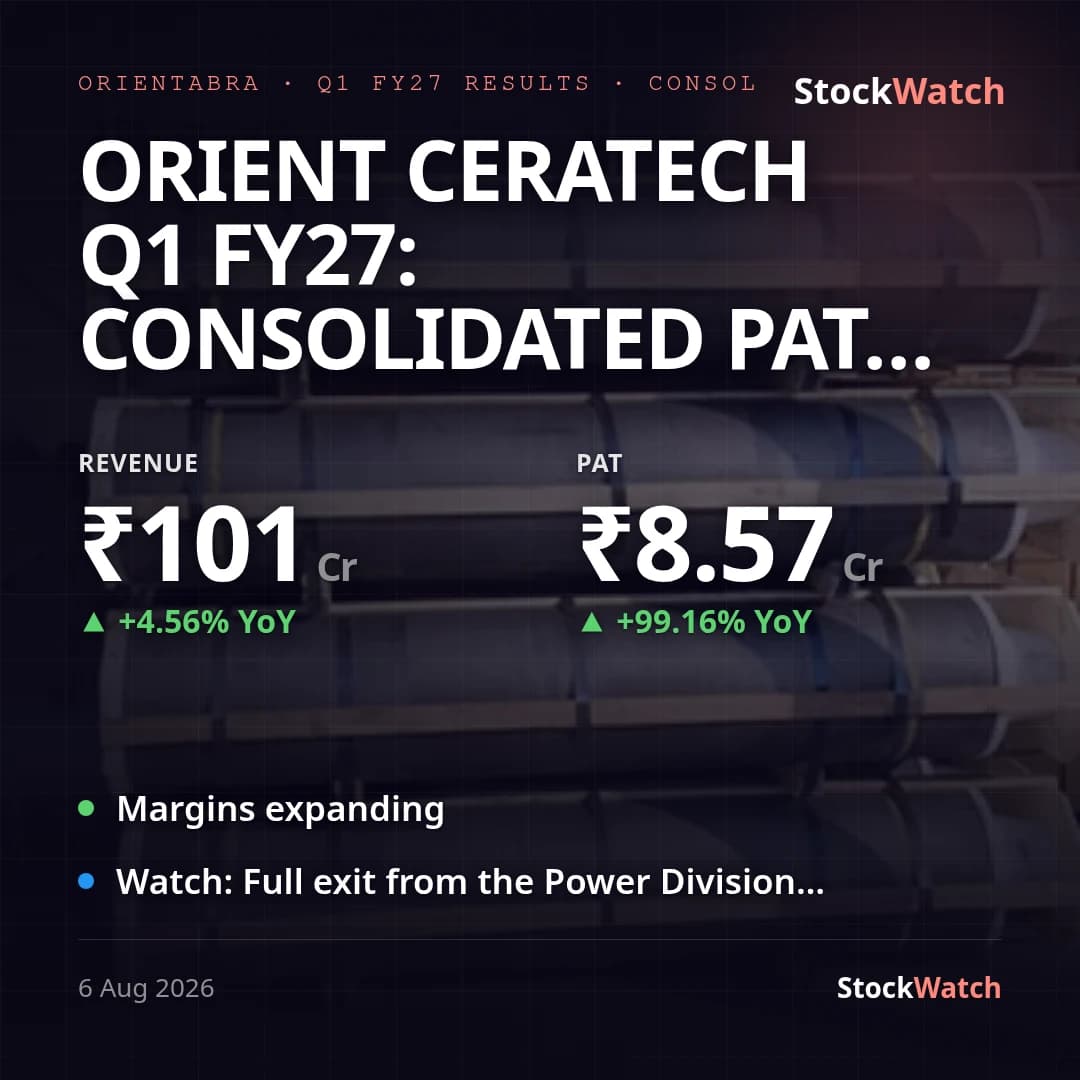
Orient Ceratech Q1 FY27: consolidated PAT +99% YoY to ₹8.57 Cr on Power Division exit
Orient Ceratech (formerly Orient Abrasives) reported consolidated Profit for the period of ₹8.57 Cr in Q1 FY27, up 99.2% YoY from ₹4.30 Cr and up 51.4% QoQ from ₹5.66 Cr, on continuing-operations revenue of ₹100.65 Cr (+4.6% YoY, +3.7% QoQ). The reported PAT absorbed a ₹5.16 Cr exceptional loss on disposal within discontinued operations, which posted a net loss of ₹1.99 Cr for the quarter (versus a ₹0.49 Cr profit a year ago) as the company exited its Power Division — the Thermal Power Station sale agreement was signed and windmills were sold (~₹15-16 Cr each, across two tranches in June and July 2026) during and just after the quarter. Stripped of this wind-down drag, continuing-operations (core ceramics) net profit was ₹10.56 Cr, up 176.7% YoY from ₹3.82 Cr — the cleaner read of underlying business momentum now that the company operates a single reportable segment, "Manufacturing & Trading of Ceramic and related products" (Note 5).
The margin improvement on continuing operations was pronounced: PBT margin on total income rose to 13.1% from 4.9% a year ago, driven mainly by a sharp drop in purchases of stock-in-trade (₹203 Cr equivalent vs ₹769 lacs a year ago, i.e. ₹2.03 Cr vs ₹7.69 Cr) alongside a larger inventory build — consistent with a shift toward more in-house manufacturing and less trading — partly offset by higher power & fuel costs (+27.9% YoY) and other expenses (+37.2% YoY). Standalone PAT of ₹5.91 Cr trailed consolidated by ₹2.66 Cr, with the gap explained by subsidiary contributions (the UAE FZE subsidiary alone added ₹0.35 Cr net profit this quarter per the auditor's note) plus intercompany revenue elimination on consolidation. There is no formal management guidance on record for this company, and no analyst/street consensus estimates were found for this quarter — both are consistent with its small-cap, thinly-covered profile. Management's own framing (via the exchange filing) centres on the Power Division exit and segment simplification rather than a growth narrative; the numbers bear this out, with the noisy divestment-related items now largely behind the company entering Q2 FY27.