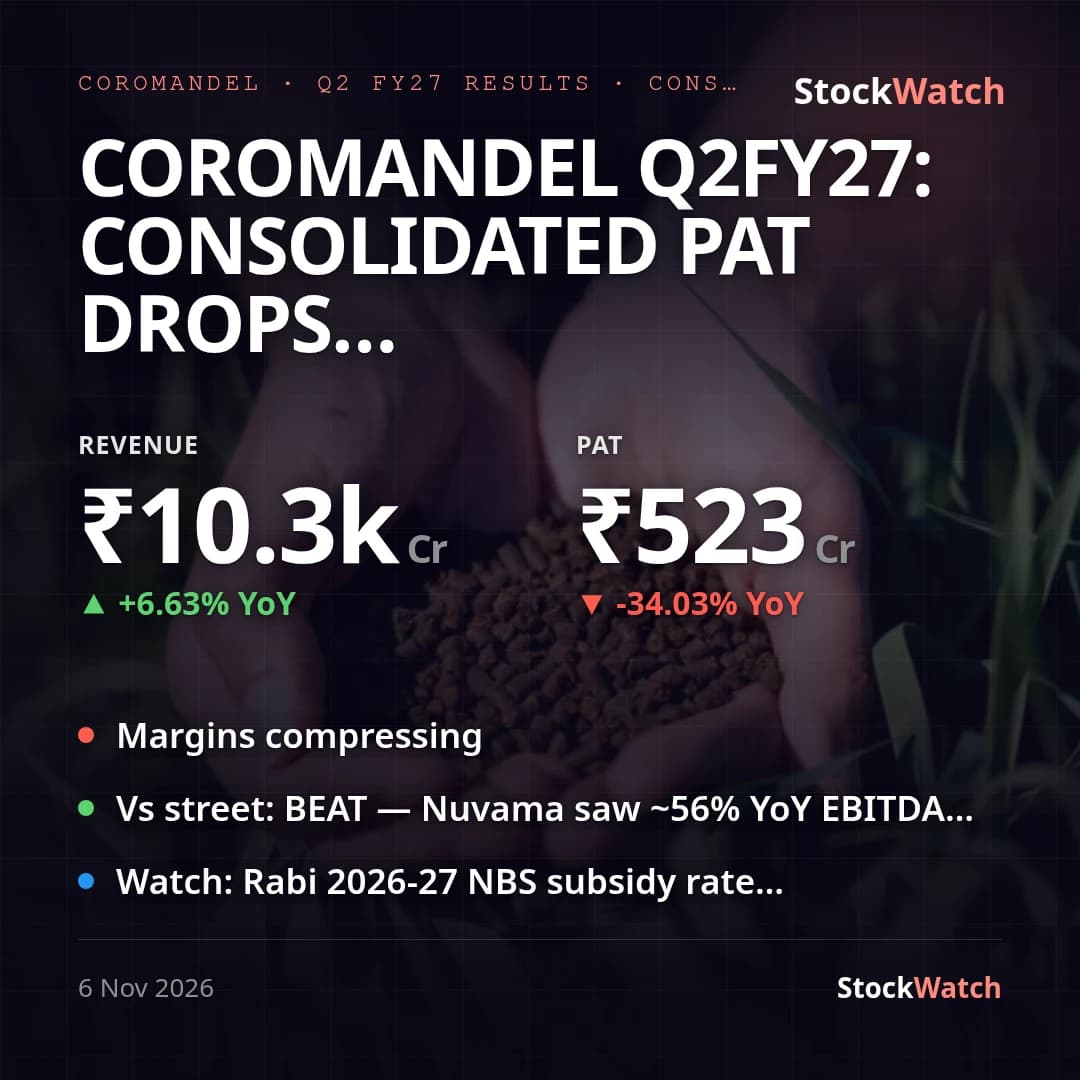
Coromandel Q2FY27: consolidated PAT drops 34% YoY to ₹523 Cr on weak nutrient demand
Coromandel International's consolidated PAT fell 34% YoY to ₹523 Cr (from ₹793 Cr) even as revenue grew 6.6% YoY to ₹10,294 Cr, pulling net margin down to 5.1% from 8.1% a year ago. Sequentially PAT was up 37% QoQ (from ₹382 Cr) on 26% QoQ revenue growth, but that is the usual H2 seasonal ramp for a fertiliser business and does not offset the YoY softness. Standalone told the same story — PAT ₹548 Cr, down 33% YoY — so there is no standalone/consolidated divergence to flag; consolidated is the primary read.
The pressure sat squarely in the Nutrient and allied segment, which is ~88% of revenue: segment EBIT fell 24% YoY to ₹746 Cr even as segment revenue rose 4.4% YoY to ₹9,042 Cr, implying real margin compression as an erratic, excess-rainfall end to the kharif season curbed offtake. Crop Protection EBIT was roughly flat to down (₹130 Cr vs ₹145 Cr YoY) despite 22% revenue growth to ₹1,308 Cr — that revenue jump is largely inorganic, from NACL Industries' now full-quarter consolidation (a subsidiary only since August 2025), so the segment's underlying profitability actually diluted rather than scaled.
Street positioning matters here: Nuvama's pre-results preview had flagged a steep 56% YoY EBITDA decline for Coromandel on monsoon-hit agri-input demand — one of the sharper cuts among peers it covered (PI Industries -37%, Rallis -27%, Sumitomo Chemical India -17%). Against that bar, a ~34% PAT decline and ~24% nutrient-EBIT decline is a beat on the bearish Street setup, even though it is still a YoY decline in absolute terms. On guidance, management's Q1 call target of lifting nutrient EBITDA/ton toward ₹6,500 isn't independently checkable from the disclosed line items this quarter, but the one guidance point that is directly verifiable — subsidy income booked at existing Kharif NBS rates pending the Rabi 2026-27 notification — remains exactly as flagged, per the company's own Note 5, with any true-up deferred to a later quarter. The quarter also saw the board convert a USD 9.7 million loan into equity in step-down subsidiary Baobab Mining and Chemicals (Senegal) and issue a fresh USD 15.5 million guarantee for a subsidiary, both consistent with management's stated backward-integration push into phosphate rock supply.
Going into Q3, which covers the Rabi season, the key markers are whether nutrient segment margins recover from this quarter's compression and whether the pending Rabi NBS rate notification triggers any subsidy true-up against what was booked this quarter at Kharif rates.